
Most cricketers know they should track their training.
The problem is they either don’t do it at all, or they go way too far.
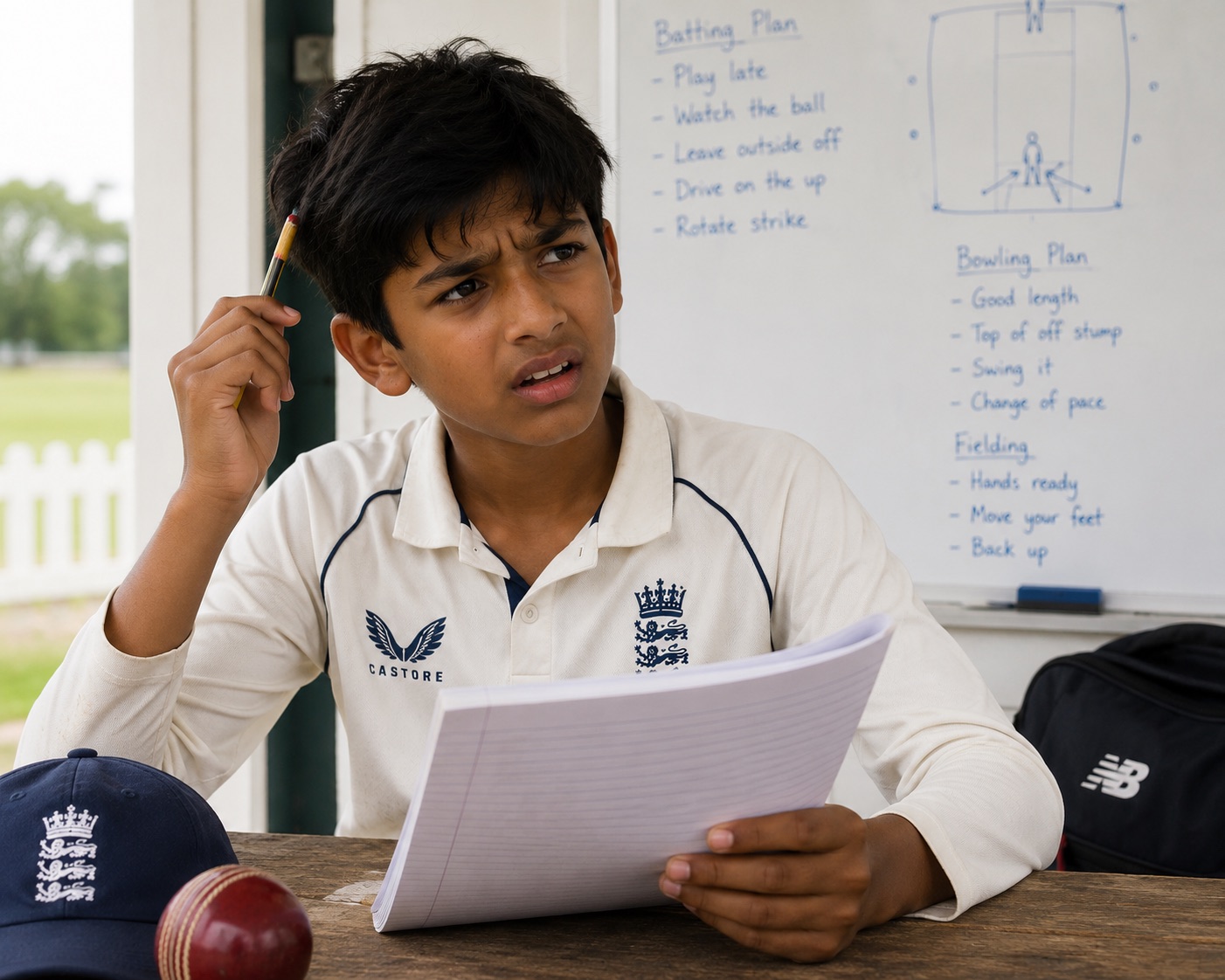
One week it’s a new spreadsheet. The next week it’s a notebook. Then a colour-coded plan. Then nothing for three months.
Simple really: tracking only works if you actually keep doing it.
You do not need to record every ball, every drill, every shot, every feeling and every tiny detail. What you need is a clear record of what you worked on, how it went, and what you need to do next.
That is the difference between training and training with purpose.
Why tracking matters
Cricket improvement is slow. You do not always notice progress after one net, one match, or one coaching session.
That is why players often get frustrated. They might be improving their decision-making, balance, bowling rhythm, confidence, shot selection, or fielding habits, but because they are only judging themselves by the latest scorecard, they miss the bigger picture.
Tracking gives you that bigger picture.
It helps you answer questions like:
- What have I actually been working on?
- Am I repeating the same mistakes?
- Am I doing enough work on the thing I say matters?
- Is my training helping my match performance?
- What should I focus on next?
Without a record, you are guessing. Sometimes you will guess right. A lot of the time, you won’t.
Keep it simple: record the right things
A good cricket training log should be short enough that you can complete it straight after training.
You only really need five things:
- What did you work on? Be specific. Not just “batting”. Write “leaving outside off”, “playing spin off the back foot”, “death bowling yorkers”, or “attacking the ball in the ring”.
- What felt good? This matters. Players are often brilliant at remembering what went wrong and terrible at remembering what is improving.
- What needs work? Do not write an essay. One or two honest points is enough.
- How did you feel? Energy, confidence and mood all affect cricket. If you were tired, distracted, frustrated, switched on or confident, log it. Over time, patterns start to show.
- What is the next focus? This is the most important bit. Every session should leave you with a clue about the next one.
That’s it.
No overthinking. No perfect system. Just a habit you can repeat.
The mistake most players make
A lot of players track outcomes, but not work.
They remember the runs. They remember the wickets. They remember getting out. They remember dropping a catch.
But they forget the preparation.
That’s a problem because performance is not just what happened on Saturday. It is the result of what you have been doing all week, all month, and all season.
A batter who keeps nicking off might not need to “try harder”. They might need to track whether they have actually practised leaving, playing late, or defending under pressure.
A bowler who keeps losing their line might not need a complete technical rebuild. They might need to notice that every poor spell follows a rushed warm-up, low energy, or too much bowling in the days before.
Tracking gives you context.
Do a weekly review
The best training logs are not just written. They are reviewed.
Once a week, take five minutes and look back.
Ask yourself:
- What came up more than once?
- What improved?
- What still feels unclear?
- What should I focus on next week?
This is where a simple record becomes useful. You start to see patterns that are impossible to see from memory alone.
Maybe your confidence is better when you train with a clear plan. Maybe your batting drops off when you rush your pre-ball routine. Maybe your bowling feels best when you have had enough recovery. Maybe fielding has quietly been ignored for a month.
That is the value.
Don’t track for the sake of it
The goal is not to become a professional data analyst.
The goal is to become a better cricketer.
So keep your tracking practical. Record enough to help your future self, your coach, or your parent understand what is going on.
Switch Hit is built around that idea: capture the work, reflect while the detail is fresh, spot the patterns, and train the next thing. You do not need to make cricket more complicated. You need to make your improvement clearer.
Start with your next session.
Log what you worked on. Log what you learned. Log what comes next.
That is how training starts to count.
A small note to try
After nets, write: “Worked on leaving outside off. Lost the shape when I rushed. Next time: pause before each set.” Keep the session in your training log and revisit the note after the next session.
Continue with using a cricket diary, or explore the player workflow.